
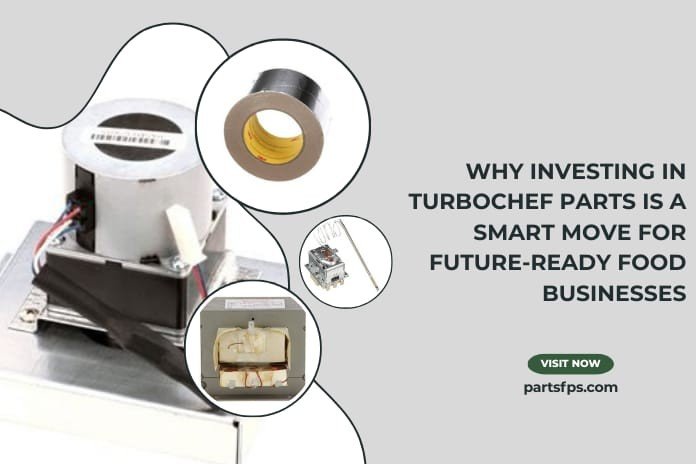
In today’s high-velocity foodservice environment, uptime, consistency, and speed are competitive differentiators. QSRs, cafés, cloud kitchens, and institutional caterers rely on advanced cooking platforms to deliver throughput without sacrificing quality. Among rapid-cook technologies, TurboChef equipment is engineered for precision, ventless operation, and programmable performance. However, even the most advanced platforms depend on component integrity over lifecycle. Strategic investment in genuine TurboChef parts supported by dependable Food service parts supply chains—directly impacts reliability, food safety, energy efficiency, and total cost of ownership. This is why forward-looking operators treat spare parts as an operational asset rather than an afterthought.
1) Uptime as a Revenue Lever: Parts Availability Protects Throughput
Every minute of downtime in a commercial kitchen equates to lost revenue, disrupted service levels, and brand risk. Rapid-cook ovens operate at high duty cycles; consumables and wear components (cooling fans, door seals, catalytic filters, control boards) degrade predictably. Proactive stocking of critical spares through PartsFPS shortens mean time to repair (MTTR) and preserves service continuity.
2) Performance Integrity: Genuine Parts Preserve Cooking Consistency
TurboChef platforms are calibrated systems. Airflow geometry, heating elements, and firmware-controlled timing profiles are tuned to deliver repeatable results across SKUs. Substituting non-OEM components can introduce thermal drift, airflow inefficiencies, and sensor inaccuracies—manifesting as uneven doneness, longer cook times, or product variability.
Consistent output is not cosmetic; it is a compliance and brand promise issue. By investing in authentic Food service parts, operators maintain the original performance envelope of the equipment. This ensures recipe fidelity across locations, protects menu engineering assumptions (cycle time, portion yield), and sustains customer trust at scale.
3) Food Safety & Compliance: Component Quality Reduces Risk
Food safety in high-throughput kitchens hinges on precise temperature control, hygienic seals, and reliable ventilation. Worn gaskets or degraded filters can compromise thermal containment and airflow, elevating contamination and safety risks. In multi-unit operations, these small degradations compound into audit findings and brand exposure.
Maintaining certified components within your Food service parts program helps kitchens remain audit-ready. From door seals that prevent heat leakage to filters that manage grease-laden vapors, genuine parts maintain the hygienic design intent of the equipment. This reduces corrective action cycles and protects compliance posture during inspections.
4) Energy Efficiency & Sustainability: Parts Health Lowers Operating Cost
TurboChef ovens are designed for rapid heat delivery with energy-efficient duty cycles. However, clogged filters, failing fans, or out-of-spec heating elements increase energy draw and extend cook times. Over a fiscal year, these inefficiencies inflate utility costs and carbon footprint.
Investing in timely replacement of high-impact components is a sustainability lever. Well-maintained airflow and thermal systems restore designed efficiency, supporting ESG objectives without sacrificing throughput. For finance leaders, this is capex-light optimization: modest spend on parts protects margins through opex reduction.
5) Lifecycle Economics: Lower Total Cost of Ownership (TCO)
Integrating TurboChef spares into your maintenance playbook aligns with reliability-centered maintenance (RCM) principles: identify critical components, set replacement thresholds, and stock accordingly. The result is predictable maintenance spend, longer asset life, and higher equipment availability—key drivers of TCO reduction.
6) Multi-Equipment Kitchens: Harmonizing with fryer parts & Line Assets
Modern kitchens are hybrid lines—rapid-cook ovens working alongside grills, refrigeration, and fryers. Reliability is systemic: a bottleneck at any station degrades throughput. Aligning your TurboChef parts strategy with broader fryer parts and Food service parts procurement standardizes vendor SLAs, inventory controls, and maintenance workflows.
This harmonization reduces cognitive load on technicians, simplifies spares kitting by station, and improves first-time fix rates. When your line assets share a unified parts governance model, operations benefit from predictable uptime across the entire cookline.
7) Speed to Market: Parts Readiness Enables Menu Innovation
Parts readiness also supports data-driven optimization. When sensors and airflow components operate within spec, performance data remains reliable—enabling culinary and ops teams to iterate on cook profiles confidently.
8) Service Network Alignment: Vendor SLAs and Technician Enablement
Investing in parts is only half the equation; aligning with service partners completes the reliability loop. Ensure your service SLAs define response times, parts availability windows, and escalation paths. Maintain digital parts catalogs and asset histories per unit to accelerate diagnosis.
By coupling PartsFPS-backed procurement with technician enablement (training on failure modes and PM procedures), organizations compress downtime and standardize repair quality across geographies—critical for franchised or multi-site operators.
9) Governance & Inventory Controls: Treat Parts as Strategic Inventory
Best-in-class operators manage parts inventory with the same rigor as food inventory: ABC classification, min–max levels, lead-time buffers, and periodic audits. High-failure-rate items (filters, seals, fans) should be stocked locally; high-cost electronics can be regionally pooled with expedited logistics.
This governance reduces stockouts without bloating working capital. When Food service parts inventory is right-sized and visible, operations teams gain confidence to scale without risking service disruptions.
Conclusion
Investing in TurboChef parts is not a maintenance expense—it is a strategic enabler for future-ready food businesses. It safeguards uptime, preserves cooking performance, strengthens food safety, lowers energy and lifecycle costs, and accelerates menu innovation. When integrated with PartsFPS procurement discipline, aligned across Food service parts categories—including fryer parts and supported by service SLAs, a robust parts strategy becomes a competitive advantage. In a market where speed, consistency, and reliability define winners, parts readiness is operational excellence in action.

